
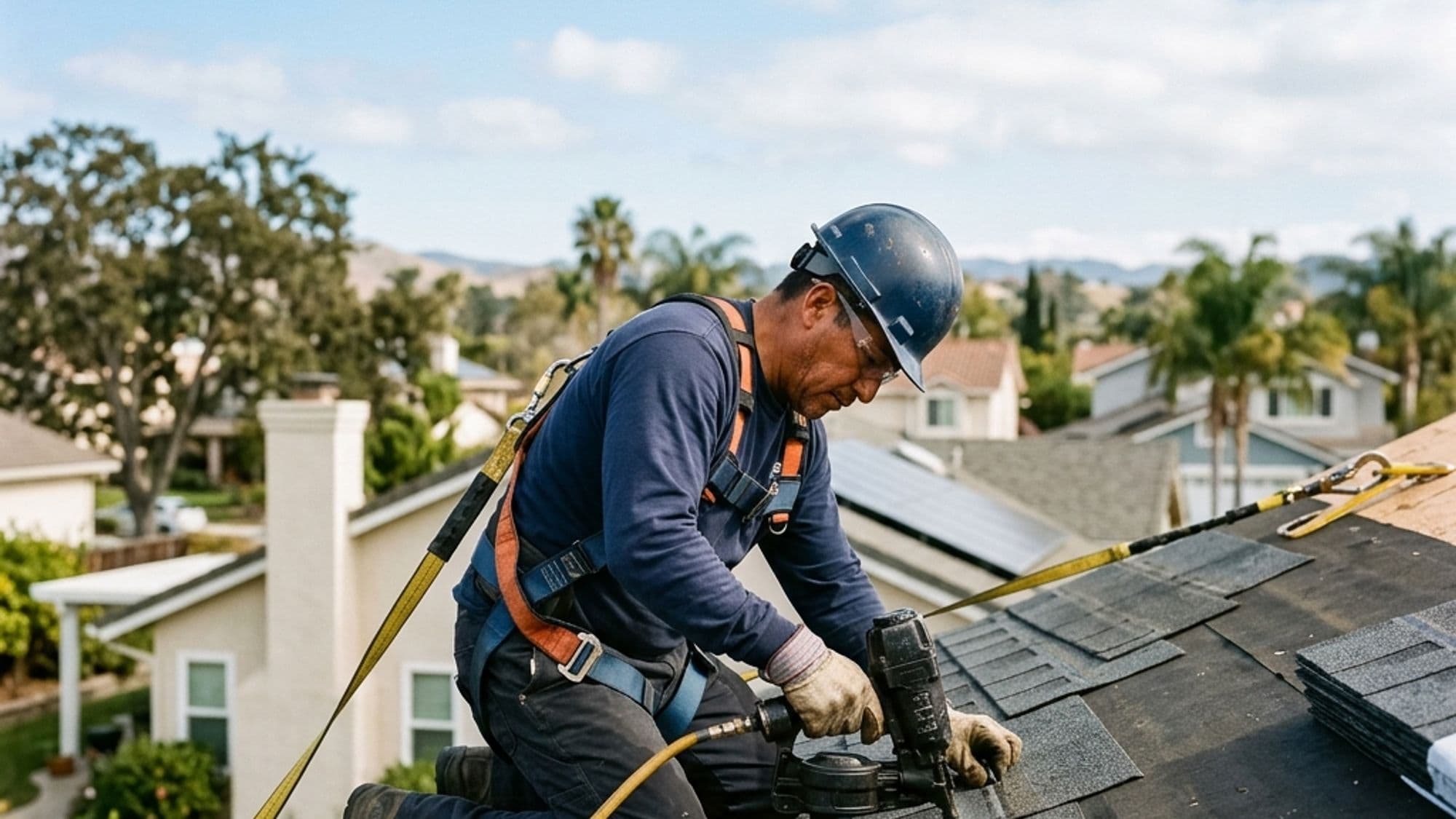
What is a C-39 roofing license in California?
C-39 is the CSLB classification for roofing contractors. A C-39 licensee installs, repairs, and waterproofs roof coverings and the related systems that make a roof weather-tight. C-39 is also one of the five classifications that must carry workers' compensation insurance even with no employees, so a roofer's license record should always show a current policy.
Verified against CSLB on · reflects current CSLB rules and California law.
Summary — key takeaways
- C-39 is the CSLB classification for roofing contractors.
- It covers installing, repairing, and waterproofing roof coverings.
- C-39 roofers must carry workers' comp regardless of employees; never accept an exemption.
- A B General Building contractor can include roofing only within a larger multi-trade project.
- Browse Active C-39 roofers by city and confirm each one's dated CSLB status.
What a C-39 roofing license permits
C-39 covers the roof itself: installing, repairing, recovering, and waterproofing shingles, tile, metal, membrane, and other roof coverings, along with the underlayment and flashing that keep the roof weather-tight. For a new roof, a reroof, or a repair, look for an Active C-39 license.
The boundary with a B General Building license matters. A B contractor takes projects involving two or more unrelated building trades, so a B can properly include roofing inside a larger job like a remodel, but a roof-only job belongs with a C-39 roofing contractor. If a general contractor bids your reroof alone, ask whether they hold C-39 themselves or will subcontract to a roofer who does, and verify that subcontractor's license too.
The roofing workers' comp rule
C-39 roofing contractors must carry workers' compensation insurance (or valid self-insurance) whether or not they have employees; the no-employee exemption available to some other trades is not an option for roofers, and it hasn't been for years. Senate Bill 216 later extended the same rule to C-8 concrete, C-20 HVAC, C-22 asbestos abatement, and C-61/D-49 tree service, and from January 1, 2028 it reaches every licensee. Roofing is high-risk work, so check the license record for a current policy and treat a roofer showing an exemption as a stop sign.
Find verified C-39 roofers
You can browse active C-39 roofing contractors by city in this directory and confirm each one's dated CSLB status before hiring.
Frequently asked questions
What can a C-39 roofing contractor do?
Install, repair, recover, and waterproof roof coverings and the related weatherproofing systems. For a new roof or roof repair, look for an Active C-39 license, or a B General Building contractor only when the roof is part of a larger multi-trade project.
Do C-39 roofing contractors need workers' comp?
Yes. C-39 roofing contractors must carry workers' compensation insurance regardless of whether they have employees; the exemption available to some other trades doesn't apply to roofing. Check the license record for a current policy before hiring.
Can a general contractor replace my roof in California?
Only as part of a larger project involving two or more unrelated trades, or by holding C-39 or subcontracting the roof to a C-39 roofer. For a roof-only job, hire an Active C-39 contractor, and if a general contractor subs it out, verify the subcontractor's license too.
Does a small roof repair need a licensed contractor?
Almost always. A licensed contractor is required once labor, materials, and all other items total $1,000 or more, and most roof work clears that easily. Below $1,000 an exemption is narrow: the job must be minor and standalone, need no building permit of any kind, and involve nobody employed to help. Reroofs and structural repairs normally require a permit, which closes that door.
How do I verify a roofing contractor's license?
Search the roofer's business name or license number in this directory for their dated CSLB status, classifications, bond, and workers' compensation, or look the number up on CSLB's Check a License tool. Confirm the license is active, that C-39 is listed, and that a current workers' compensation policy is on file.
Verify a contractor