
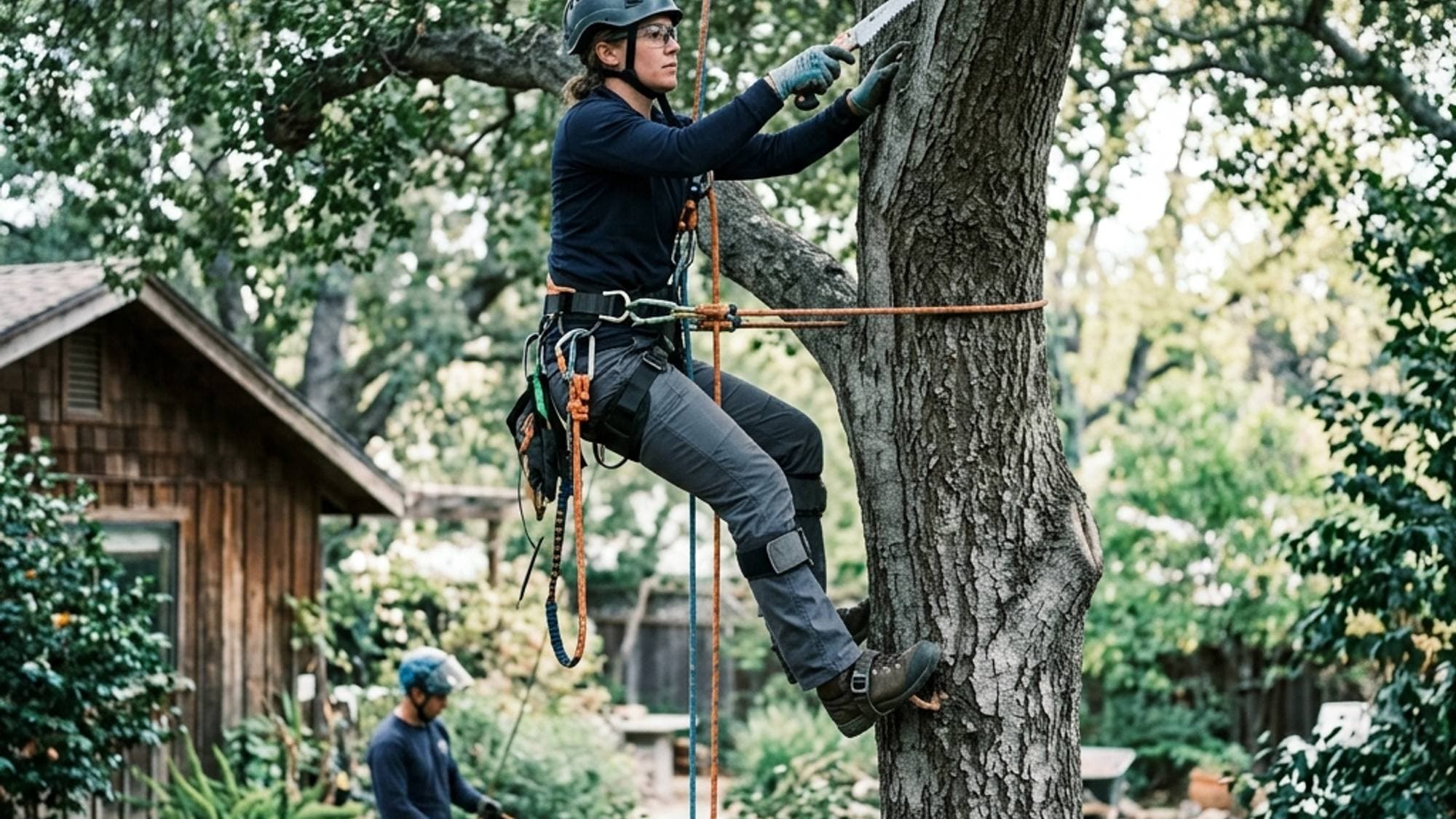
California C-49 Tree and Palm Contractor License: Scope, Verification, and Workers' Comp
The C-49 license is the California classification for tree and palm contractors: planting, maintaining, pruning, and removing trees and palms, including stump removal. Any tree job where labor, materials, and all other items total $1,000 or more must be done by a licensed contractor. Tree work is treated as high-risk for workers' compensation: the statute's no-exemption list names the legacy C-61/D-49 Tree Service code, and CSLB regards C-49 as the same scope of work. An ISA Certified Arborist credential is a voluntary certification, not a CSLB license.
Verified against CSLB on · reflects current CSLB rules and California law.
Summary — key takeaways
- C-49 'Tree and Palm' became its own CSLB classification on January 1, 2024.
- CSLB stopped issuing the legacy C-61/D-49 'Tree Service' code, but existing D-49 holders stay valid: a contractor may show either code.
- An ISA Certified Arborist is a voluntary certification, not a CSLB license: verify the CSLB license separately.
- The workers'-comp no-exemption list names C-61/D-49 Tree Service; C-49, its successor, is not yet named in the statute (see the workers' comp section).
- City tree-removal permits are separate from the contractor's license.
What a C-49 tree and palm license permits
The C-49 classification covers tree and palm work: planting, maintaining, trimming and pruning, and removing trees and palms, including stump removal and the related cabling and bracing.
The C-27 landscaping classification can also perform some tree work as part of a landscape job, but a dedicated tree service performing removals should hold the C-49 (or the legacy D-49 described below).
C-49, legacy D-49, and the ISA arborist credential
C-49 'Tree and Palm' became its own classification on January 1, 2024. Before that, tree work was a C-61 limited specialty (D-49 'Tree Service'). CSLB stopped issuing D-49, but existing D-49 licenses stay valid, so a legitimate tree contractor may show either C-49 or D-49 today. CSLB regards the two as the same scope of work: treat both as covering tree work.
An ISA Certified Arborist credential is a voluntary professional certification: useful, but it is not a CSLB contractor license and does not authorize contracting. Verify the CSLB license (C-49 or D-49) separately. City tree-removal permits are also separate, required by many municipalities regardless of who does the work.
What tree work legally requires a licensed contractor
Any project where labor, materials, and all other items total $1,000 or more must be performed by a CSLB-licensed contractor. The threshold rose from $500 to $1,000 on January 1, 2025 under Assembly Bill 2622 (Business & Professions Code §7048). Below $1,000, a narrow minor-work exemption can apply only if the job is casual, minor, and standalone (not part of a larger project), requires no building permit of any kind, no one is employed on the job, and any advertising discloses that the person is not licensed.
Many cities also require a permit to remove a protected or street-facing tree, a separate requirement from the contractor's license. For removals, look for an Active C-49 (or legacy D-49).
The tree-service workers' compensation rule
Tree work is high-risk, and the workers' compensation no-exemption list in Business & Professions Code §7125 names C-61/D-49 Tree Service, the legacy code, alongside C-8 (concrete), C-20 (HVAC), C-22 (asbestos abatement), and C-39 (roofing): those contractors must carry coverage regardless of employees. C-49 Tree and Palm, the successor classification issued since January 1, 2024, is not yet named in the statute or on CSLB's workers' comp pages, though CSLB regards the two classifications as the same scope of work.
Senate Bill 1455 will extend that requirement to every CSLB licensee, regardless of employees, on January 1, 2028, with CSLB's exemption-verification process due by January 1, 2027. Whatever code a tree contractor holds, given the danger of the work, confirm active workers' compensation coverage before any climbing or removal begins, and if the record shows a no-employee exemption instead, ask who will actually be on the crew.
How to verify a tree and palm contractor
Confirm the license is Active and the C-49 (or legacy D-49) classification is listed, either on the CSLB "Check a License" tool or on the contractor's profile in this directory. Match the license to the business you're hiring. Check that the $25,000 contractor bond is on file (Business & Professions Code §7071.6) and that workers' compensation coverage, or a valid exemption, is shown.
For tree work especially, treat 'licensed and insured' as one check: a missing or lapsed workers'-comp record is a reason to pause. Browse California tree contractors and see each one's dated CSLB status before you hire.
Frequently asked questions
How do I verify a tree service is licensed and insured in California?
Look up the business on the CSLB "Check a License" tool or in this directory, confirm it reads Active with the C-49 (or legacy D-49) classification, and confirm the workers'-compensation record: tree work is high-risk, so coverage matters.
Do you need a license to remove a tree in California?
Tree removal of $1,000 or more in labor, materials, and all other items must be done by a CSLB-licensed contractor (C-49 or legacy D-49). Many cities also require a separate permit to remove protected or street trees.
Is an ISA Certified Arborist the same as a contractor's license?
No. ISA Certified Arborist is a voluntary professional certification, not a CSLB license, and it does not authorize contracting. Verify the CSLB license (C-49 or D-49) separately.
What license should a tree service have in California, C-49 or D-49?
C-49 'Tree and Palm' is the current classification (since January 1, 2024); D-49 'Tree Service' is the legacy code that CSLB no longer issues but still honors. A legitimate tree service may show either, and CSLB regards the two as the same scope of work.
Does a tree service need workers' comp even with no employees in California?
For the legacy C-61/D-49 Tree Service classification, yes: it is on the statutory no-exemption list and must carry coverage regardless of employees. C-49 Tree and Palm, its successor, is not yet named in the statute, though CSLB regards the two as the same scope of work, and from January 1, 2028 every CSLB licensee will need coverage regardless of classification. Ask for proof of coverage either way.
Verify a contractor
Related guides and questions
- Do California contractors need workers' compensation insurance?
- How do I verify a California contractor's license?
- Licensed vs. unlicensed contractor: what work needs a license in California
- Licensed vs. bonded vs. insured: what's the difference?
- What are the red flags when hiring a contractor?
- What does an "active" CSLB license mean?