
California C-27 Landscaping Contractor License: Scope, Verification, and Contractor vs. Architect
The C-27 license is the California classification for landscaping contractors. A C-27 contractor builds and installs landscapes: gardens, irrigation, hardscape, grading, and decorative outdoor improvements. Any landscaping job where labor, materials, and all other items total $1,000 or more must be done by a licensed contractor. A C-27 landscape contractor is not a landscape architect, who is licensed by a different California board.
Verified against CSLB on · reflects current CSLB rules and California law.
Summary — key takeaways
- C-27 is the CSLB classification for landscaping contractors.
- It covers gardens, irrigation, hardscape, grading, and decorative outdoor improvements.
- A landscape contractor (CSLB C-27) is not a landscape architect (licensed by the LATC): a common wrong-database mix-up.
- Paver and retaining-wall work overlaps C-29 (masonry) and C-8 (concrete).
- If your landscaper applies pesticides, check their CDPR applicator credential separately.
What a C-27 landscaping license permits
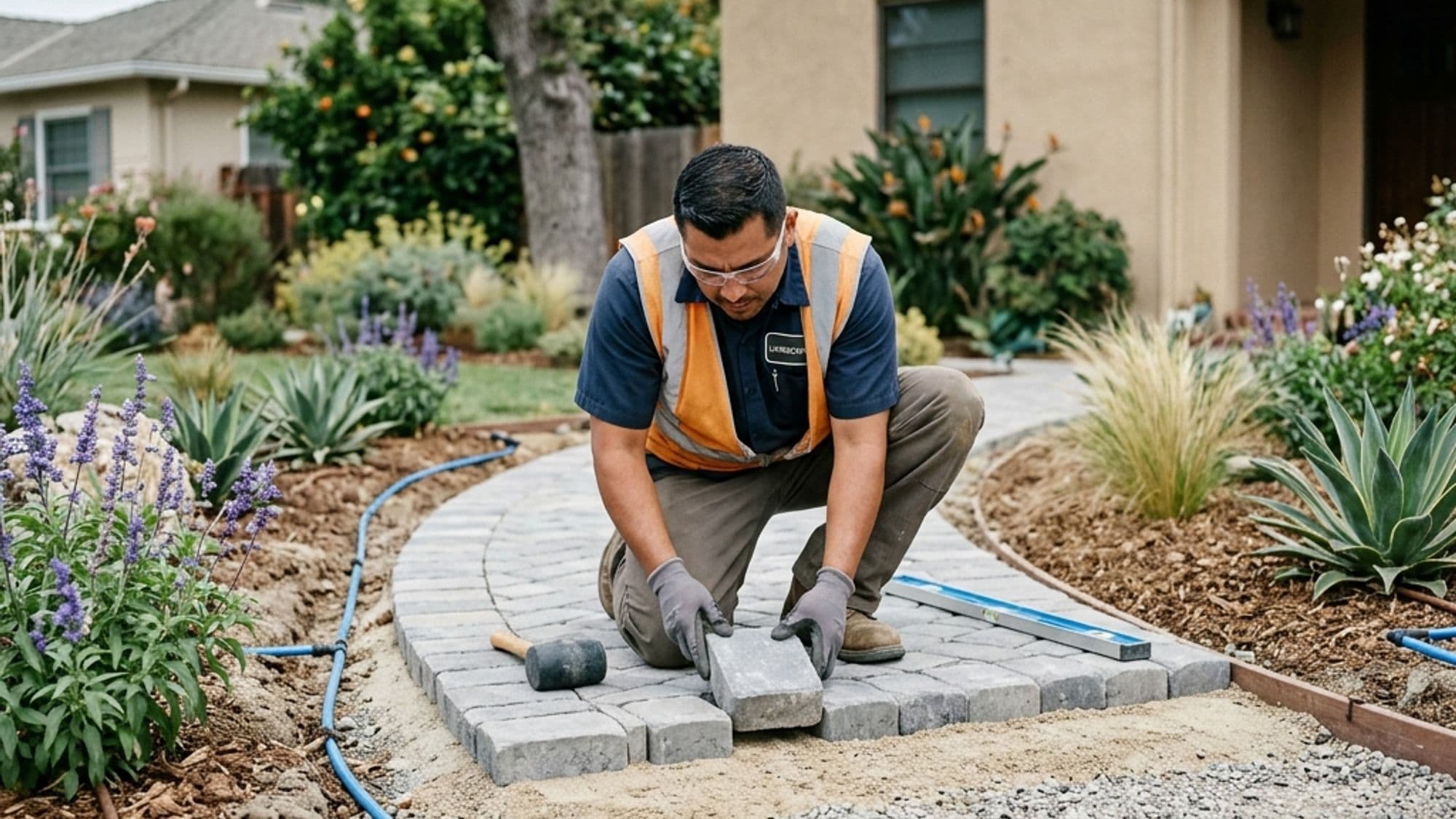
The C-27 classification covers installing and building landscape systems (planting gardens and lawns, irrigation, drainage, grading, and decorative outdoor work such as walkways and hardscape) to beautify, develop, or improve a parcel of land.
Some of that work overlaps other classifications: paver and retaining-wall work can fall under C-29 (masonry) or C-8 (concrete), and if the landscaper applies pesticides as part of the job, that is a separate California Department of Pesticide Regulation (CDPR) applicator credential to check.
Landscape contractor vs. landscape architect
A landscape contractor (CSLB C-27) builds and installs the landscape. A landscape architect designs it and is licensed by a different body, the Landscape Architects Technical Committee (LATC), with a separate lookup. Homeowners often land on the wrong database searching to 'verify a landscaper.'
For someone building your yard, verify the CSLB C-27. For someone producing design or planning documents, that is the LATC credential.
What landscaping work legally requires a licensed contractor
Any project where labor, materials, and all other items total $1,000 or more must be performed by a CSLB-licensed contractor. The threshold rose from $500 to $1,000 on January 1, 2025 under Assembly Bill 2622 (Business & Professions Code §7048). Below $1,000, a narrow minor-work exemption can apply only if the job is casual, minor, and standalone (not part of a larger project), requires no building permit of any kind, no one is employed on the job, and any advertising discloses that the person is not licensed.
Larger landscape projects (grading, drainage, and hardscape) can also require city permits, separate from the contractor's license. For anything beyond minor planting, look for an Active C-27.
How to verify a C-27 landscaping contractor
Confirm the license is Active and the C-27 classification is listed, either on the CSLB "Check a License" tool or on the contractor's profile in this directory. Match the license to the business you're hiring. Check that the $25,000 contractor bond is on file (Business & Professions Code §7071.6) and that workers' compensation coverage, or a valid exemption, is shown.
Browse Active C-27 landscaping contractors by city in the California landscaping directory and see each one's dated CSLB status before you hire.
The landscaping workers' compensation rule
A landscaping contractor must carry workers' compensation insurance for any employees. A contractor that genuinely works alone can currently file a no-employee exemption, so the CSLB record may show an exemption rather than a policy: confirm one or the other before you hire. Since January 1, 2026 (SB 291), a licensee caught employing workers without coverage faces minimum penalties of $10,000 per violation for a sole owner and $20,000 per violation for a partnership, corporation, or LLC, and cannot renew without current coverage.
Senate Bill 1455 will extend that requirement to every CSLB licensee, regardless of employees, on January 1, 2028, with CSLB's exemption-verification process due by January 1, 2027. Five high-risk classifications already carry no exemption at all, C-8 (concrete), C-20 (HVAC), C-22 (asbestos abatement), C-39 (roofing), and C-61/D-49 (tree service), and must hold coverage regardless of employees.
Frequently asked questions
Do landscapers need a license in California?
Any landscaping job of $1,000 or more in labor, materials, and all other items must be done by a CSLB-licensed C-27 contractor. Smaller minor work can be unlicensed only if it isn't part of a larger project and the worker discloses they aren't licensed.
What's the difference between a landscape contractor and a landscape architect in California?
A landscape contractor (CSLB C-27) builds and installs the landscape; a landscape architect designs it and is licensed by the Landscape Architects Technical Committee (LATC), a separate board with its own lookup.
How do I hire a licensed landscape contractor in California?
Confirm an Active C-27 on the CSLB record in the business's name, check the bond and workers' compensation, get a written contract, and, if pesticides are involved, confirm the CDPR applicator credential.
Do I need a license for a small landscaping job in California?
Only work under $1,000 in labor, materials, and all other items can be done unlicensed, and only if it's casual minor work, no one is employed on the job, no permit is required, and the person discloses they aren't licensed. At or above $1,000, hire an Active C-27 landscaping contractor.
Can my landscaper remove a tree in California?
A C-27 landscaping contractor can perform incidental tree work as part of a landscape project, but a dedicated tree service doing removals should hold the C-49 Tree and Palm classification (or the legacy C-61/D-49). Many cities also require a separate tree-removal permit.
Verify a contractor
Related guides and questions
- How do I verify a California contractor's license?
- Licensed vs. unlicensed contractor: what work needs a license in California
- Licensed vs. bonded vs. insured: what's the difference?
- What does an "active" CSLB license mean?
- California C-29 masonry contractor license guide
- California C-49 tree and palm contractor license guide
- Do California contractors need workers' compensation insurance?